How to accept crypto for your business
Learn how to easily accept crypto for your business with simple steps, secure payment solutions, and effective strategies to attract new customers in the evolving digital landscape today.
 3385
3385 
How to let business accept crypto payments securely
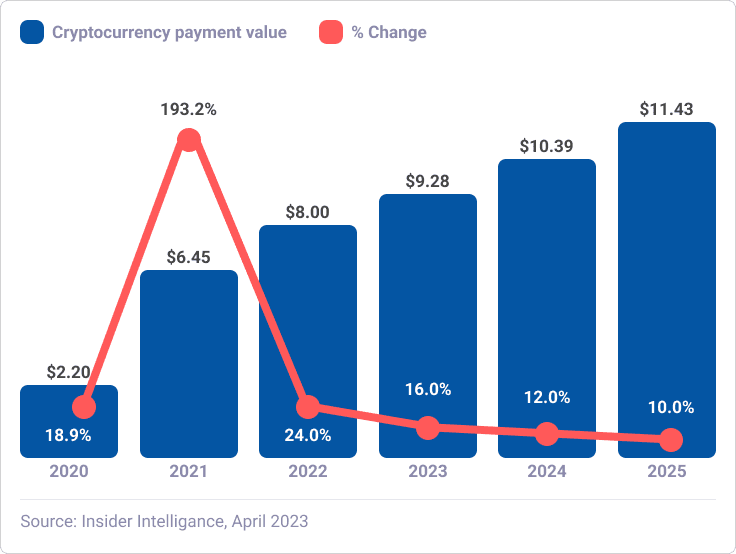
Per Insider Intelligence, the U.S. crypto payments scene is projected to surge by 21.3% between 2022 and 2025. On a global scale, we're looking at a potential 12.6% bump. This hints at a future where Joe and Jane Businessowner might be using crypto more and more for their deals.
Sounds promising, right? But if you're thinking of crypto processing for your business, you probably have a bunch of questions. Like, how do you even set up cryptocurrency payments? Are there plug-and-play gateways out there? How do you keep these transactions safe? And what's the legal lowdown on crypto?
We'll break it all down, answer your questions, spotlight the 4 best crypto processing hotspots, and guide you on how to start accepting crypto payments.
What Are the Security Risks of Using Cryptocurrency for Payment?
According to a CNBC study, 60% of Americans consider investing in cryptocurrencies risky. Let’s investigate why.
General Risks
Cryptocurrencies represent a new way to handle transactions. Like any financial system, they come with risks, including theft, fraud, and hacks. In 2022, there were 198 crypto thefts. At the same time, this number is much smaller than regular financial thefts, making cryptocurrency a desired payment method.
Digital Wallet Risks
If you use crypto, you'll need a digital wallet. Wallets differ in their security. While some can be hacked more easily, others have stronger security features. It's important to choose secure wallets because recovering lost funds is nearly impossible if it is hacked.
Phishing and Fake Websites
Phishing incidents in the crypto world increased by 40% in 2022. Scammers trick people into sharing their crypto details on look-alike fake websites. Unsuspecting users often end up sending money to these scammers.
Device Attacks
Beyond fake websites, hackers send emails with harmful links or files. These can harm your device or steal your data if clicked or downloaded. A growing concern is the malware designed for crypto mining.
Ransomware Dangers
Ransomware locks users out of their files, demanding payment in crypto to unlock them. Paying doesn't always guarantee to get your files back, meaning potential permanent data loss.
How Can You Safely Navigate Crypto Processing Risks?
More companies are using cryptocurrency, even with its risks. Zippia reports that in 2022, about 15,174 businesses globally use crypto, with 2,300 in the US.
But how can you use crypto safely? Here's a simple guide:
Pick a Reliable Payment Gateway
Gateways help manage cryptocurrency payments on your site. It’s crucial to pick a well-known cryptocurrency processor with a history of security.
Use a Non-Custodial Wallet
Non-custodial wallets give only you control over your funds and private keys. No company or bank can access them. Many also provide backup options in case of software issues or device damage.
Minimize Human Errors
Always double-check details when sending or receiving crypto. Be on the lookout for scams like fake emails or harmful software. And avoid doing transactions on public wifi.
What Regulations Govern Crypto Processing in the U.S.?
Thinking of using crypto for your business but unclear on the regulations?
Here’s what you should know.
In the U.S., crypto is a hot topic for federal and state officials. To clear the fog, GlobalLegalInsights highlights the key points of the 2023 U.S. crypto regulatory landscape:
- Government views and definitions.
- Rules for virtual currencies.
- Sales guidelines.
- Taxes.
- Money transfer and anti-laundering laws.
- Ads and testing.
- Who can own and license rules.
- Mining.
- Border rules and declarations.
- Reporting must-dos.
- Inheritance rules.
When considering the regulation and taxing of digital currency assets, below are critical questions you must address.
Do Banking and Anti-Laundering Laws Cover Crypto Transactions?
Absolutely. The Anti-Money Laundering Act (AMLA) of 2020 says all transactions with "money-like value" must comply with all reporting and remittance standards. Digital currency is included in this. The AMLA is considered a spin off of the former Financial Crimes Enforcement Network (FinCEN). In 2022, President Biden additionally released a framework for responsible development of digital assets.
Has the U.S. Government Set Laws for Crypto?
Not really. Congress has mostly let agencies deal with crypto problems. But, in 2016, House and Senate members made a group to discuss it. They didn't offer many new laws until 2018, but more are showing interest now. Hence states use existing rules to regulate digital currency. Nonetheless, specific crypto laws differ from one state to another.

How Is Crypto Income Taxed?
"The biggest misconception in this space in general is that people think that crypto is invisible to the regulators. But that's not the case," says Chandrasekera, Head of Tax Strategy at CoinTracker.
The IRS sees crypto like stocks for tax purposes. That implies crypto income and gains are taxed while losses might be deductible.
Each year, total your gains and losses. Say you lost $5,000 in 2022. You can deduct $3,000 from 2022's income and save $2,000 for 2023.
Taxes on gains depend on how long you keep an asset. If you hold it for a year or less, it's short-term tax. More than a year? It's long-term tax.
What Are the Most Secure Crypto Processors?
Deloitte reports that US businesses using crypto have a 327% return on investment and gain 40% more customers. As more businesses accept crypto payments, they seek safe ways to handle these transactions. Let's look at the best options for secure crypto processing.
BitHide
BitHide is a software solution for a self-hosted crypto wallet. To use BitHide, it must be installed on the company's servers to keep you the only owner of your data.
Benefits
- Easy Integration: Starting with BitHide is straightforward. It's designed to be user-friendly, minimizing setup delays. To start, just connect the support team to send you the installation software and the guide.
- Ownership Over Your Data: Using this gateway ensures that every transaction detail remains securely on your servers. Having a centralized system can be invaluable for businesses keen on maintaining data sovereignty.
- Diverse Feature Sets: BitHide isn't just about transactions; it offers a suite of features that provide privacy and efficient administration.
- Manage Multiple Cryptocurrency Accounts: Whether you're a conglomerate or a startup with multiple merchant liaisons, you simplify the management of several wallets.
BitPay
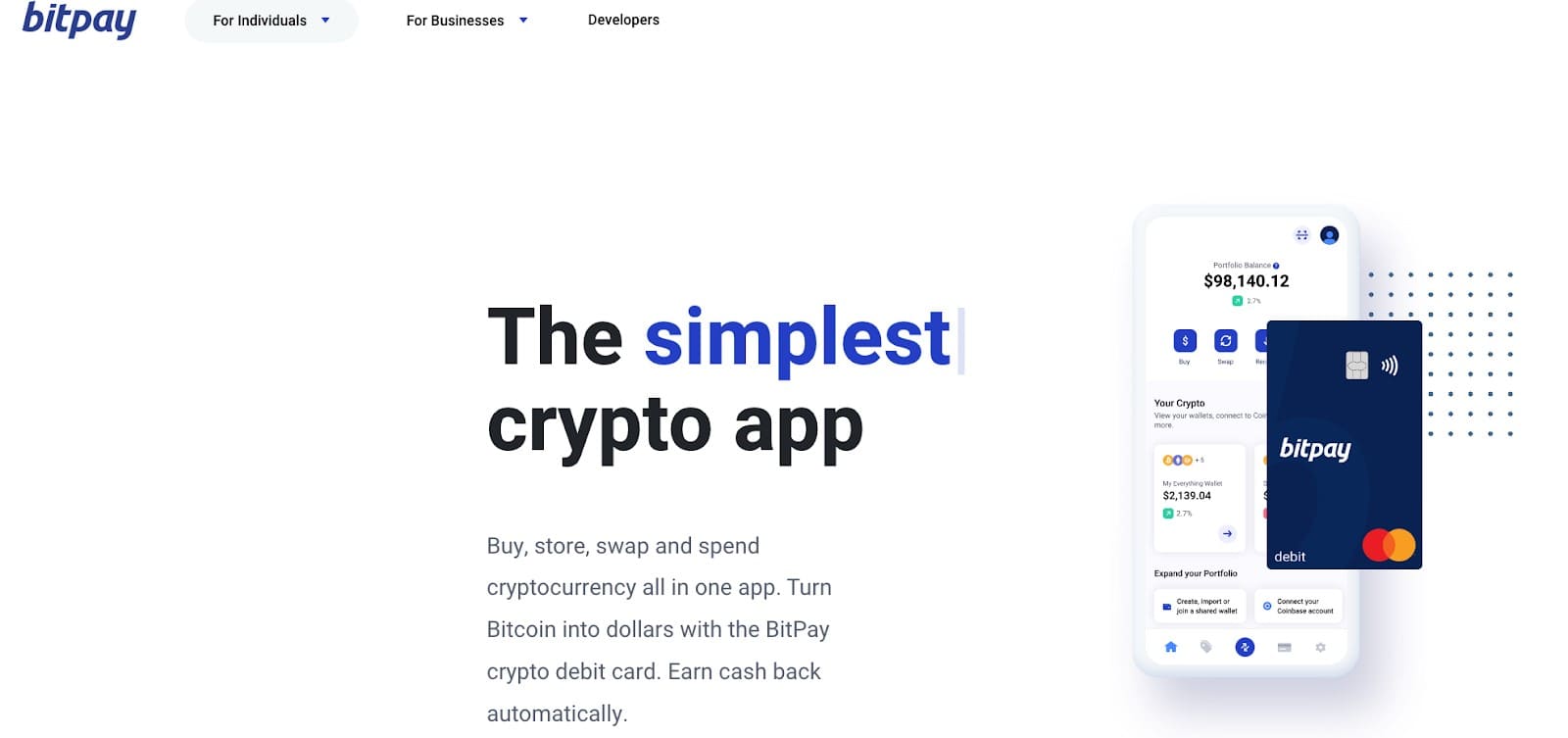
BitPay, developed by GitHub, Inc. in the USA, is a business crypto gateway.
Beyond businesses, everyday users can manage, buy, or swap their cryptocurrencies with it. BitPay’s accessible on mobile and desktop.
Advantages
- Provides a crypto prepaid card. This card works with familiar names like Visa and Mastercard.
- Offers built-in storage. You don't need an external wallet.
- BitPay smoothly integrates with Coinbase. This makes crypto transactions easier.
- The gateway supports a range of 16 popular cryptocurrencies.
- You can accept crypto with over 100 different wallets.
Disadvantages
- Customization options are limited.
- Unfortunately, Bitpay doesn’t have a free version.
- Refunds can be slow if a transaction doesn't go through.
- If you don't use their debit card, you're charged $5.
Coingate

Coingate, based in Lithuania, offers a wide-ranging crypto platform with a global reach. Originally starting as a Bitcoin exchange, they now support more than 70 cryptocurrencies. They prioritize making crypto transactions as intuitive and straightforward as possible for global businesses.
Advantages
- Coingate offers a range of deposit methods, catering to various user preferences.
- For every cryptocurrency, there's a distinct wallet address for storage.
- Both novice and expert traders will find tools to suit their needs.
- The platform’s security has received high praise and trust.
Disadvantages
- The standard fees are at 3% for traders, with merchants getting a slightly lower 1%.
- Certain transactions carry extra costs.
- Depending on how and where you're withdrawing, fees differ.
- Users need to navigate a two-tiered verification process to unlock all features.
How BitHide Helps You Process Crypto Securely
To accept cryptocurrency, businesses need a gateway that must be added to their website or app.
Without this in place, creating individual crypto payment addresses is challenging. BitHide simplifies this. You install the BitHide software on your server and connect your website to the cryptoprocessor.
Here's a step-by-step guide to the process:
- A customer selects the cryptocurrency payment option at checkout.
- The gateway creates a unique payment address for the transaction.
- The customer transfers their crypto funds to this address.
- The system verifies the payment.
- The cryptocurrency is then sent to the seller's wallet, and the transaction is logged.
In Conclusion
Traditional businesses favored bank-issued credit cards, but modern consumers seek diverse payment methods.
However, the volatility of cryptocurrencies deters many businesses from meeting their evolving customer needs. For example, the value of a cryptocurrency, like Bitcoin, can fluctuate dramatically before converting to a stable fiat currency, often complicating financial planning and earnings projections.
With BitHide, businesses can instantly withdraw budgets or accept funds directly in USDT.
If you want a safe, reliable, and easy-to-integrate crypto payment gateway, try BitHide now.